
An Introduction to Sichuan Mahjong (Blood Battle to the End)
Sep 25, 2026 · 5 min read
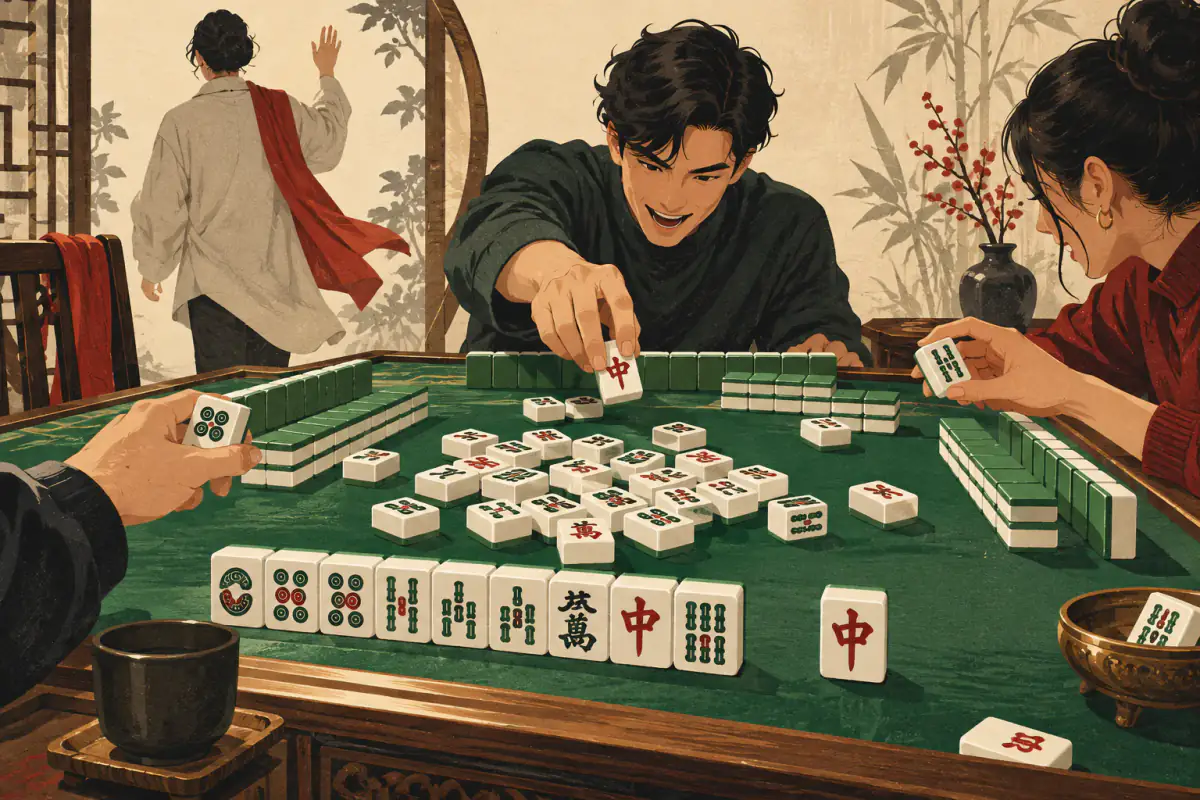
Sichuan Mahjong (also known as Xuezhan Daodi, "blood battle to the end") is one of the most popular variants in China, known for a playstyle that's much faster and more aggressive than other variants.
Only One Suit Plus Honors (Sometimes No Honors at All)
The most striking difference: at the start of the game, every player must discard one of the three suits (Characters/Circles/Bamboo) entirely from their hand (the "Ding Que" rule) -- automatically pushing the game toward a semi-Honitsu pattern from the very start. Many Sichuan variants don't even use honor tiles or Winds at all.
Playing Until the End, Not Stopping After One Win
Another distinctive feature: once one player wins (Hu), OTHER players who still have a chance keep playing until only one player hasn't won yet or the wall runs out -- unlike most other variants, which end the hand immediately once there's a single winner.
No Chi
Sichuan Mahjong generally doesn't allow Chi (claiming a discard for a sequence) at all -- only Pon and Kan are allowed, making its playstyle feel more Toitoi-centric compared to other variants.
An Example Ding Que Flow
Say you're dealt a hand with 5 Character tiles, 4 Circle tiles, and 4 Bamboo tiles. You must choose one suit to discard entirely -- say you pick whichever suit has the fewest tiles (Circles or Bamboo, 4 each) rather than Characters (5 tiles), so fewer tiles need discarding upfront. From then on, for the rest of the hand you may NOT hold any tile from whichever suit you "que'd" (voided).
Doubling Fan Scoring, Similar to Hong Kong
Sichuan Mahjong generally also uses a doubling-per-fan point system (similar to Hong Kong Mahjong), with special bonus fan like "Da Dui Zi" (all triplets, similar to Toitoi) and "Qing Yi Se" (a pure single suit, similar to Chinitsu) worth much more since the Ding Que rule automatically pushes hands toward just one or two suits.
Compare this playstyle with card-based American Mahjong.
Read About American Mahjong →