
How to Choose a Good Physical Mahjong Set
Sep 24, 2026 · 5 min read
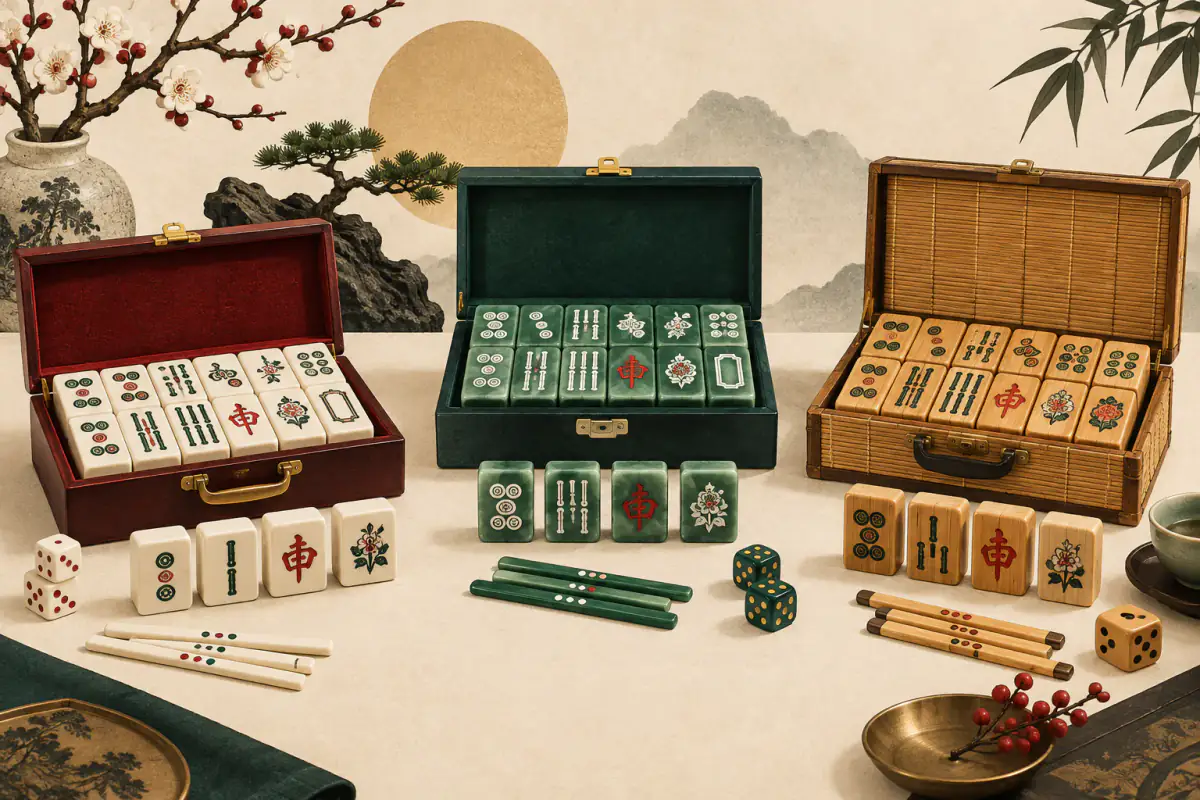
If you already play mahjong online or use a calculator regularly, owning a physical set can be the natural next step for playing in person with friends/a club. Here's a concrete comparison to help you decide.
| Tile Material | Traits | Best For |
|---|---|---|
| Melamine/Acrylic | Lightweight, durable, affordable | New players, regular everyday use |
| Bakelite | Heavier, a distinctive "clack" sound when shuffling, mid-to-high price | Players who like a vintage/classic feel |
| Bone/Bamboo | Antique/collector sets, very heavy, high price | Collectors, gifts, not intensive daily use |
| Cards (not tiles) | A portable alternative to physical tiles | Traveling, limited space |
Number of Tiles in the Set
Make sure the set has 144 tiles (136 standard + 8 flower/season tiles) if you want flexibility across rulesets, though for Riichi Mahjong you actually only need the core 136 tiles -- just set the 8 flower/season tiles aside.
Tile Size
Larger tiles (often called "Japanese size" or American-size, around 26-28mm) are easier to read and hold, especially for new players, but need a bigger table. Smaller tiles (18-22mm) are more portable and cheaper but their details can be harder to read from a distance.
Extra Features Worth Checking
- Automatic mahjong tables -- shuffle and build the wall automatically, much pricier than a regular set but a big time-saver for regular sessions.
- A storage case -- make sure there's a compartmentalized case so tiles stay organized and easy to recount if any go missing.
- Included score sticks -- some sets already include a full score stick set, cutting down on a separate purchase.
Not sure about buying a physical set yet? Practice with the online calculator first.
Try the Mahjong Calculator →