
Mahjong vs Rummy: Similarities and Differences
Sep 24, 2026 · 5 min read
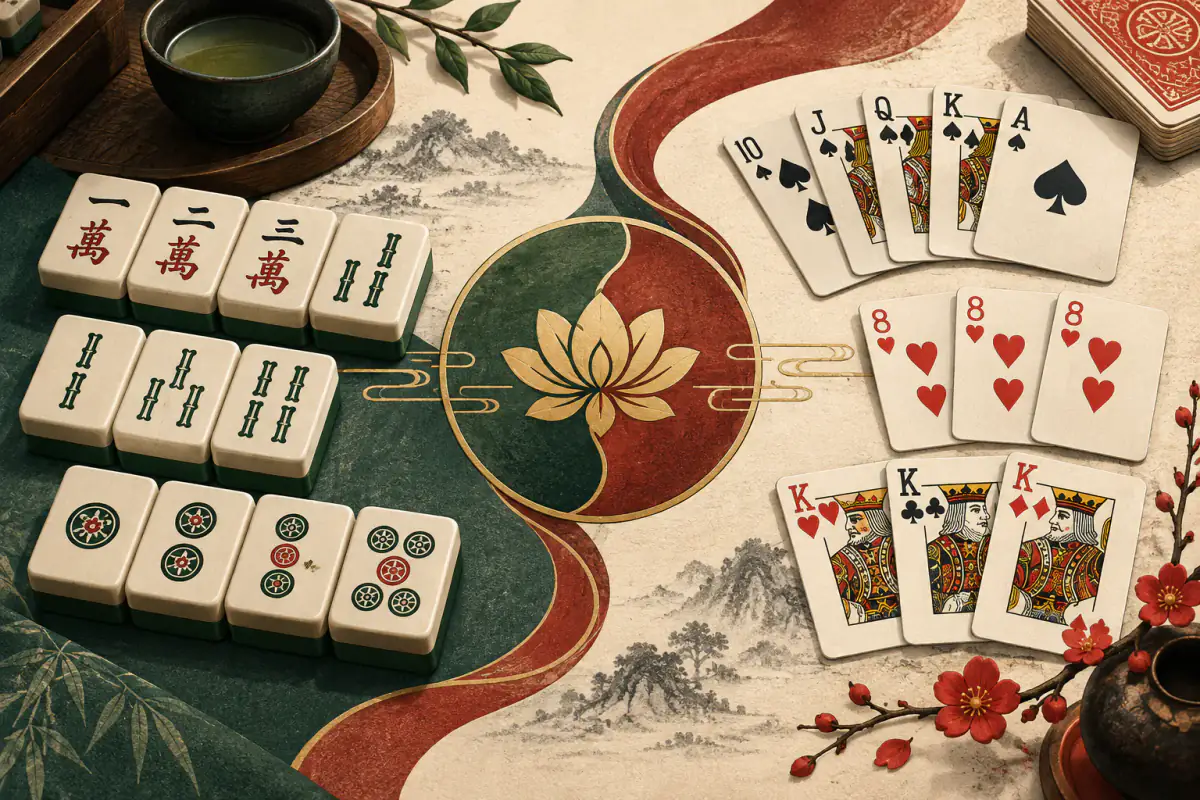
Mahjong and Rummy are often compared because their basic concept is similar: forming combinations (sets/sequences) from cards or tiles in hand, while taking turns drawing and discarding. But once you get into the details, the differences are significant.
| Aspect | Mahjong (Riichi) | Rummy |
|---|---|---|
| Medium | 136 physical tiles, 4 copies of each type | 52 playing cards (or more with multiple decks) |
| Standard player count | 4 players (3-player variants exist) | 2-6+ players, very flexible |
| Winning requirement | Must have at least 1 yaku, not just a valid shape | Forming a valid combination is enough, no extra pattern requirement |
| Scoring complexity | High -- a fu x han system with dozens of yaku | Low -- generally the sum of card values left in opponents' hands |
| Unique elements | Honor tiles (Winds/Dragons), Riichi, dora | Jokers/wildcards (depending on the variant) |
| Player interaction | Ron/Pon/Chi/Kan from anyone's discard | Generally only drawing from one discard pile |
Why It Feels Similar at First
If you've already played rummy, mahjong's basic concept -- forming 4 groups (sets) plus 1 pair from 14 tiles -- will feel familiar, similar to forming several sets/sequences from the cards in a rummy hand.
The Biggest Challenge Moving From Rummy to Mahjong
The main challenge is NOT the concept of forming combinations (you've already mastered that from rummy), but two new things: understanding the yaku system (a valid combination isn't automatically legal to win with), and calculating fu/han scoring, which is far more intricate than just summing card values.
Start learning the basic concept of forming a mahjong hand.
Read the Basic Riichi Rules →