
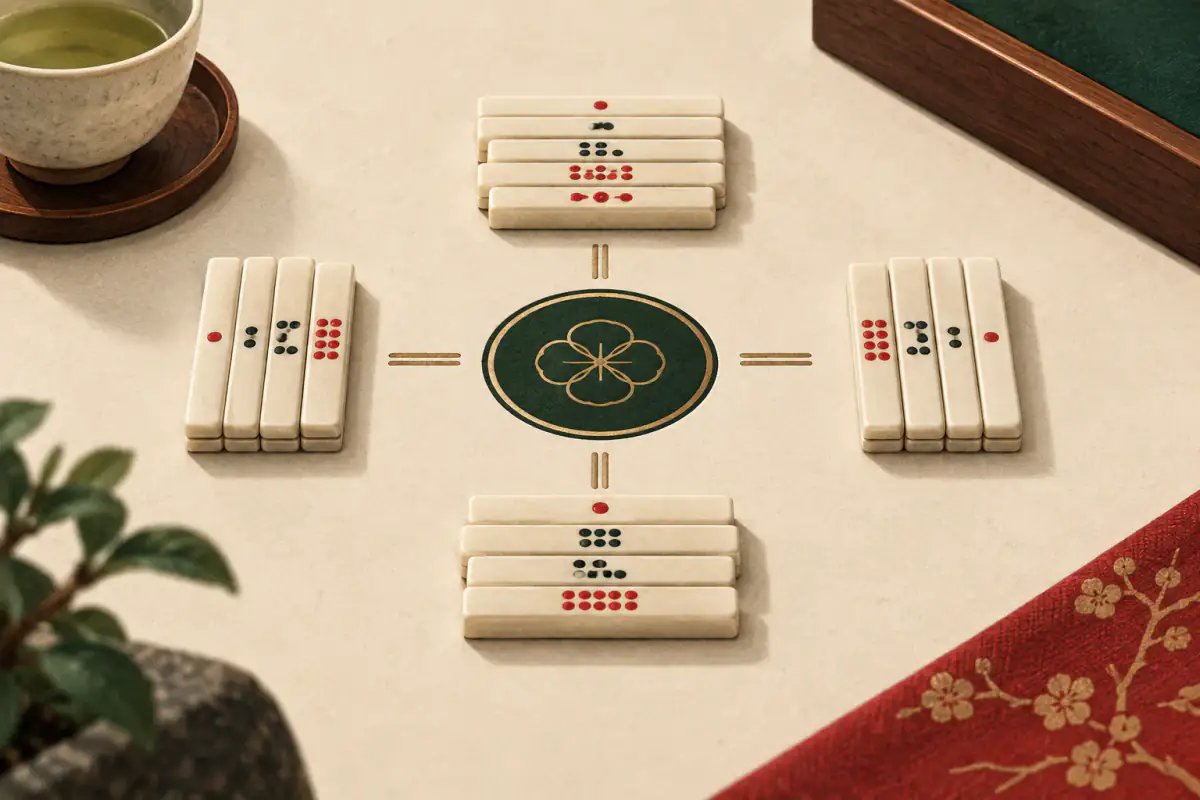
When playing physical mahjong traditionally, score isn't written on paper but represented with score sticks of various different values.
| Stick Value | Physical Trait | Common Use |
|---|---|---|
| 10,000 points | Longest, usually with a red stripe | Storing large scores compactly |
| 5,000 points | Medium-sized | A middle denomination |
| 1,000 points | The most commonly used, standard size | Everyday transactions, including riichi bets |
| 100 points | The shortest | Small payments like Honba (dealer-continuation bonus) |
A Sample Starting Stick Set (25,000 Starting Points)
If each player starts with 25,000 points, a common stick allocation per player is: 2 x 10,000-point sticks (20,000), 1 x 5,000-point stick (5,000), with no small sticks needed at the start -- totaling exactly 25,000. Throughout the game, these sticks get exchanged/broken down as payments require.
Why It's Still Used in the Digital Era
Even though many now play through apps/platforms (which automatically calculate score), physical sticks remain popular for in-person mahjong sessions because they feel more tactile and make it easy to gauge score at a glance without a calculator -- just look at the stack in front of each player.
If you want fully automatic scoring with zero manual counting, try the JongArena calculator.
Open the Score Calculator →