
Folding Strategy in Mahjong: When to Back Off
Sep 23, 2026 · 6 min read
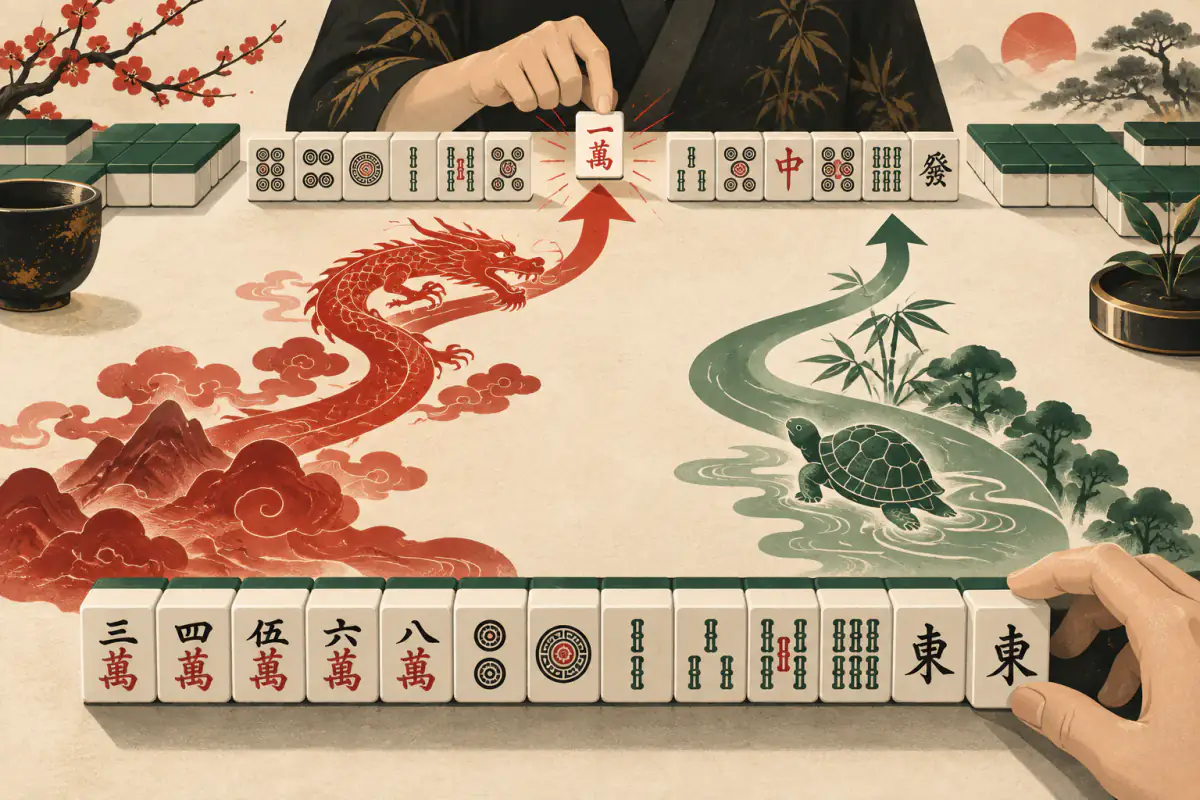
One of the most underrated skills in Riichi Mahjong is knowing when to stop chasing your own win and focus on folding (oriru, "to descend") to avoid dealing into an expensive opponent's hand.
Signs You Should Fold
- An opponent has already declared riichi, and your own hand is still far from tenpai (2+ shanten).
- Your hand is tenpai but worth very little (no yaku, or 1 han with no dora), while the riichi opponent could have a big hand.
- Strong signs an opponent is chasing an expensive hand (several high-value Pon/Kan, or discards suggesting Honitsu/Chinitsu).
Reading Safe Tiles (Genbutsu)
The safest tiles are genbutsu -- tiles the player you're worried about has already discarded themselves, OR tiles discarded by anyone after they declared riichi (since they'd be furiten if waiting on it).
Suji and Kabe as Extra Clues
If no genbutsu remain, the concepts of suji (a 1/7 tile is relatively safer if the 4 in that same suit has already been discarded) and kabe (counting how many of a certain tile have already appeared in total) help judge which tiles carry lower risk, even if not 100% safe.
Learn about the tenpai/noten status relevant while folding.
Read Tenpai vs Noten →